Introduction
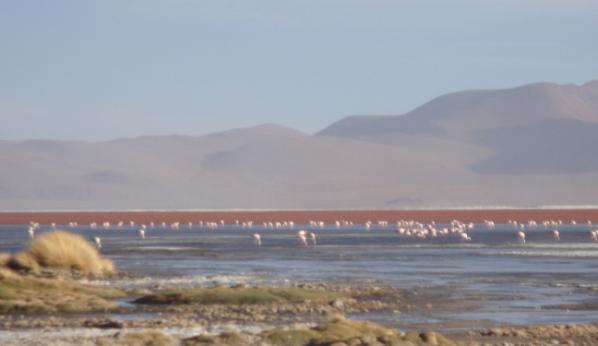
 | For our CWW trip we went to the Salar de Uyuni, the world's largest salt flat. The Salar is located in the Southwest of Bolivia, about a 12 hour train ride from Oruro. The Salar is mostly devoid of any wildlife. However the Salar plays host to several species of pink flamingos. The Salar's name comes from Salar, spanish for salt flats, and the town Uyuni (in Aymara meaning enclosure) which serves as a gateway for all tourist coming to see the salt flats. Salar de Uyuni attracts thousands of tourist not only because of its beauty, the uncommon animals but beautiful animals, the kind people around, and the great amount of fun it is, but people visit it to experience the view of something that can probably only be found in Bolivia. The ninth grade class was lucky enough to come visit it and stay for almost a week. In this time, we were able to learn many new things such were the myths of the creation of the flats, the culture of the people living in that area, we visited the 7 meters tall cacti island, the history of train cemetery, and the vast geographical features that surround the region. |
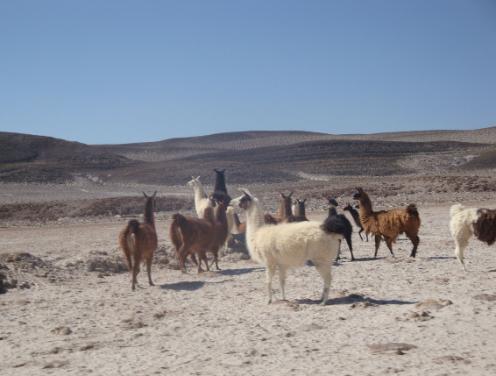
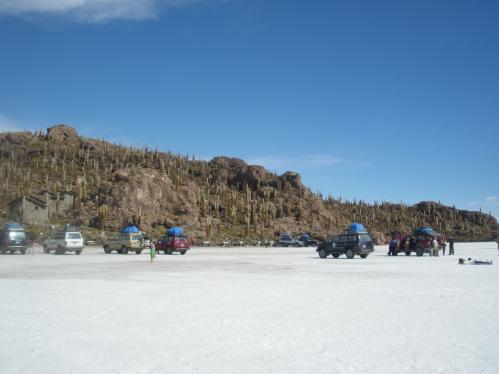
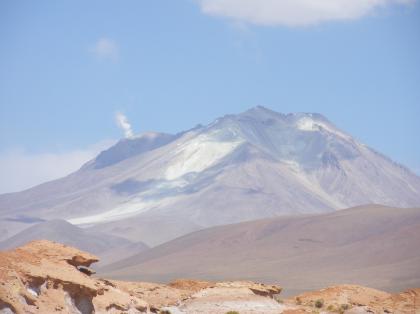
The purpose was not only to learn more about the natural attractions that are found throughout the country, but we were also able to experience the life that people around here live. Their life-styles were extremely different, and most of the time we didn't not appreciate it because of the lack of materials we use everyday, and different atmospheres. As mentioned previously, we saw many animals that are rare around that region, or even the country. Some animals were flamingos, fox, hares, and many others. The landscapes were also very unique. We visited an island that contained cacti that measured over 7 meters, as stated above. We visited an island where we watched hares run around, and were were allowed to feed them. Finally, we visited another amazing landscape, with huge rocks that just laid there in the middle of no where. The rocks were in shapes that were so strange, that they are known world wide. These shapes were made by wind erosion. Although I described many gorgeous sceneries, there are hundreds more to visit.
The other purpose of this trip was to get to know our class mates better, and try communicating with each later forming a stronger bond and unifying our class. Each day was very different, with different activities, and this helped us know each other even more as time passed. By the end of the trip we were already as united as could be. The experiences we lived through caused us to rely on each other, and trust one another.